
01
The yarn
Count, twist and origin. A high-twist cotton and a low-twist cotton at the same weight make two completely different cloths.
Weberei seit 1908 / Bregenzerwald
Forty-one qualities, yarn-dyed in the house, woven on looms a hundred and fifty centimetres wide because that is the reed.
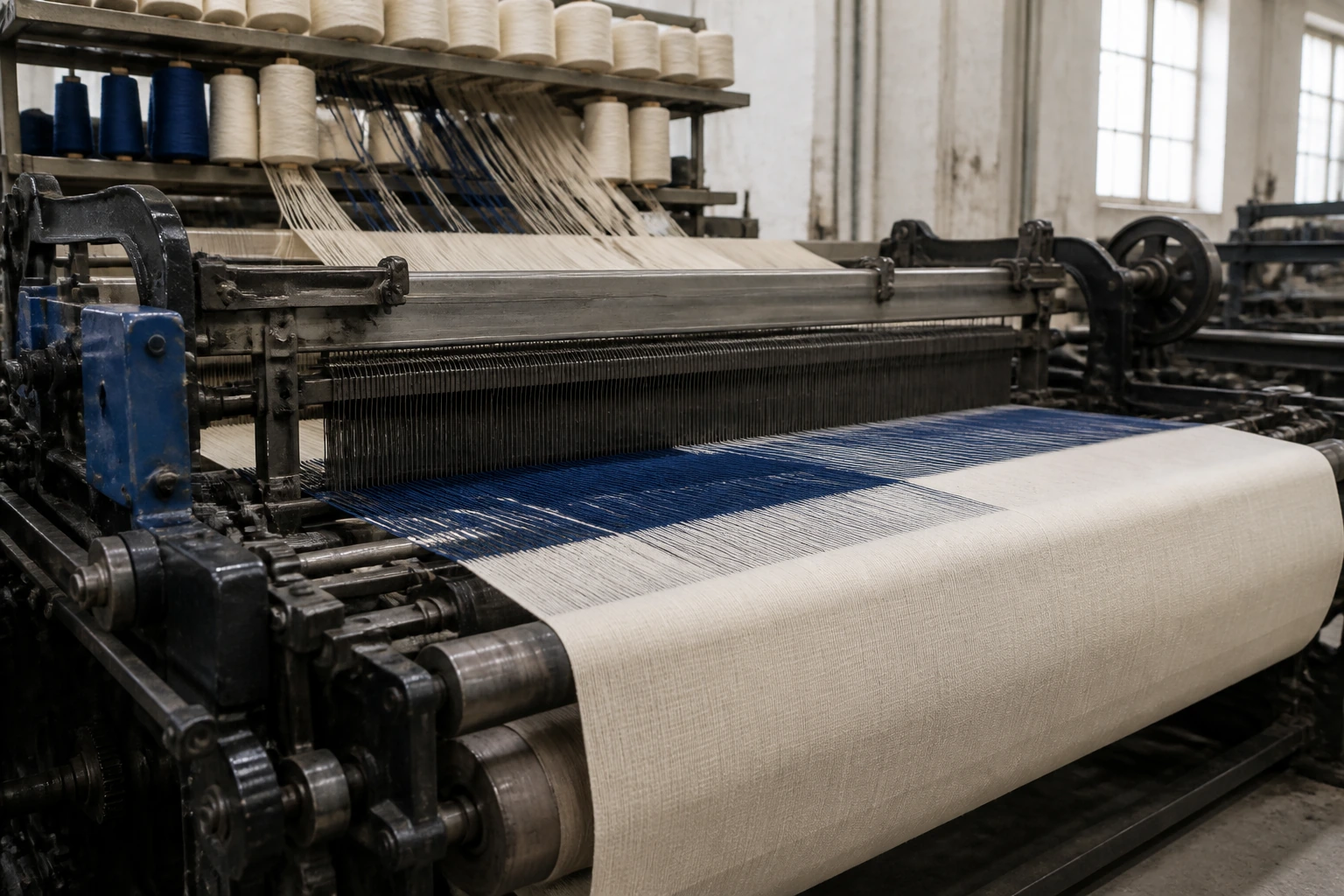
Yarn-dyed, not piece-dyed. It costs more, it fades in a way people like, and it is why our indigo goes grey rather than patchy.
The minimum is one metre and always has been. A cutting length is not a nuisance; it is how people find out whether they want forty.
The book does not change in spring. Articles are retired only when a yarn stops being made, and we announce it a year ahead.
One hundred and fifty centimetres, because that is the reed. Anything wider is somebody else’s mill and we will tell you which.
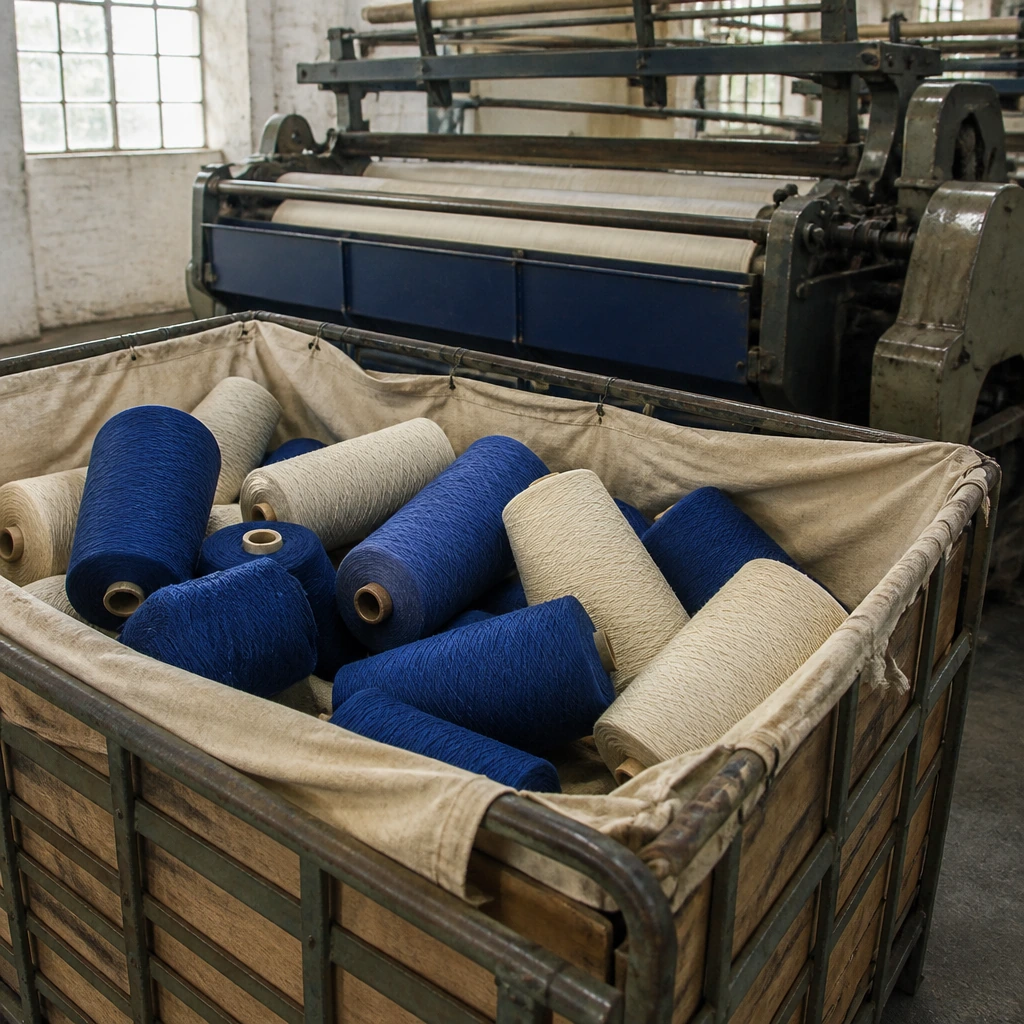
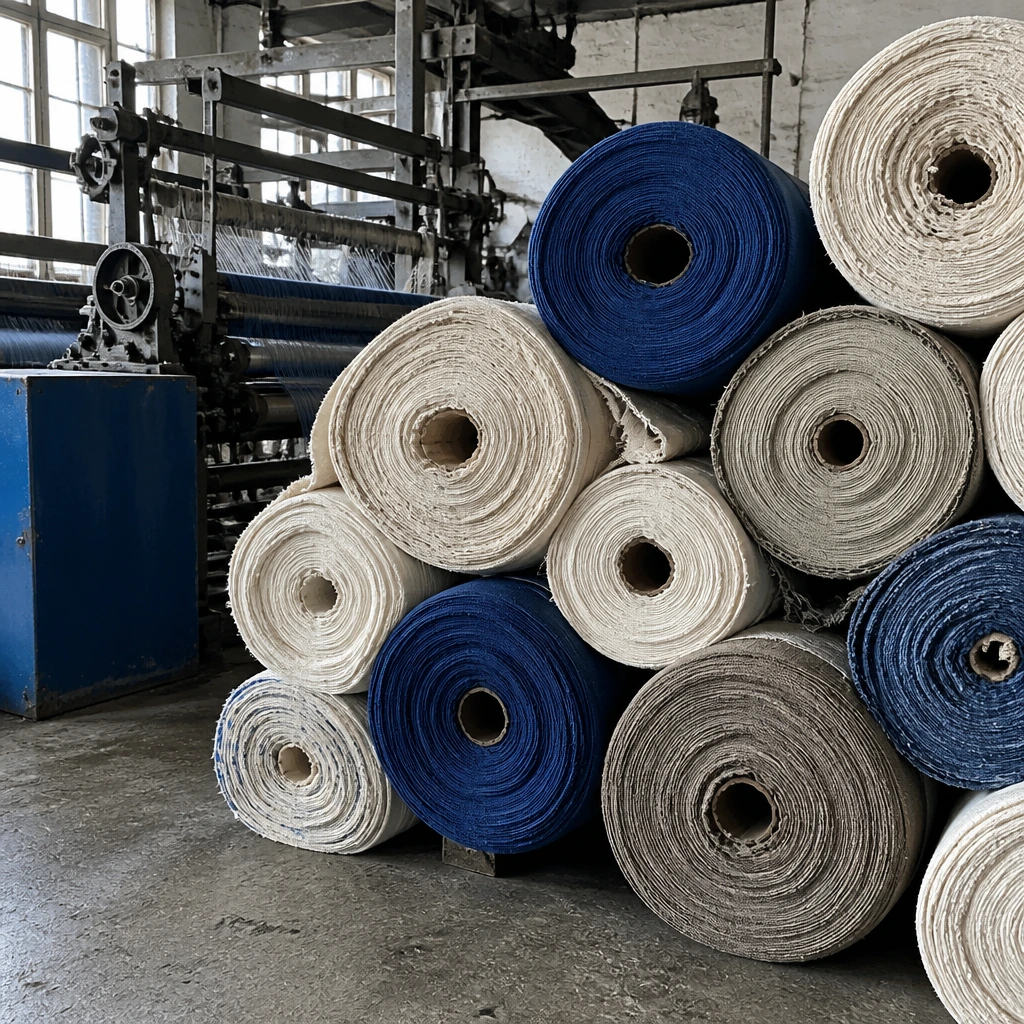
Six looms, two warping frames, one indigo vat and eleven people, three of whom are the grandchildren of people who worked the same floor.
The building is on the Bregenzerach because the water used to turn the wheel. It now cools the dye house, which is a less romantic job and a more useful one.
We sell direct and to about sixty makers. There is no wholesale price and no retail price. There is a price, and it is on the list above.
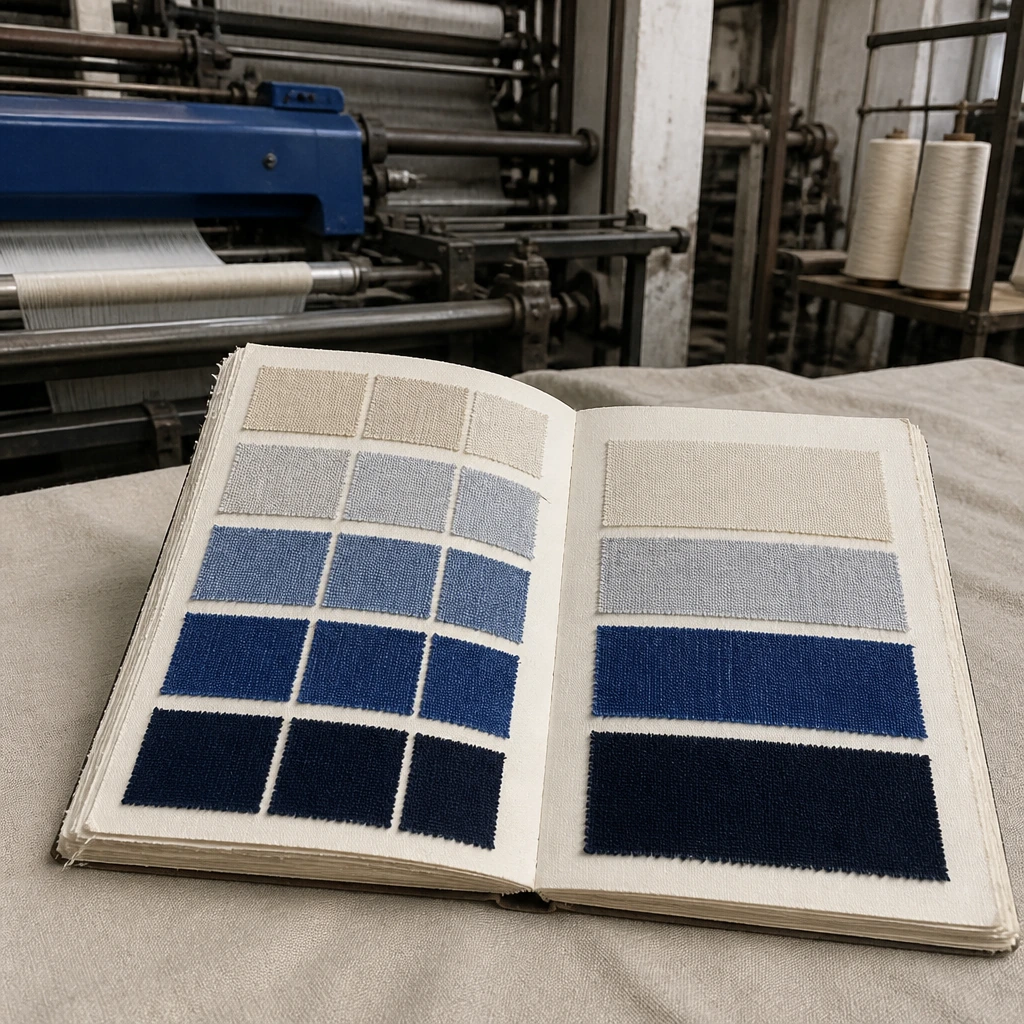
By the time the shuttle moves, the cloth has already been decided.
01
Count, twist and origin. A high-twist cotton and a low-twist cotton at the same weight make two completely different cloths.
02
Yarn dyed, in the house, before warping. It costs more and it is the only way to get an indigo that goes grey rather than patchy.
03
Ends per centimetre. Too open and it grins; too close and it boards. This is the number that takes the longest to get right.
What happens after the loom. Every article is finished the same way every time, which is why repeat orders match.

