
01
Grind drift
Two microns coarser and the same pigment reads paler and chalkier. Grind is measured on every batch and printed on the tin.
Est. 1911 / Attercliffe
We mill dry pigment and sell it by the kilo, unbound and unadulterated. What you do with it afterwards is your business.
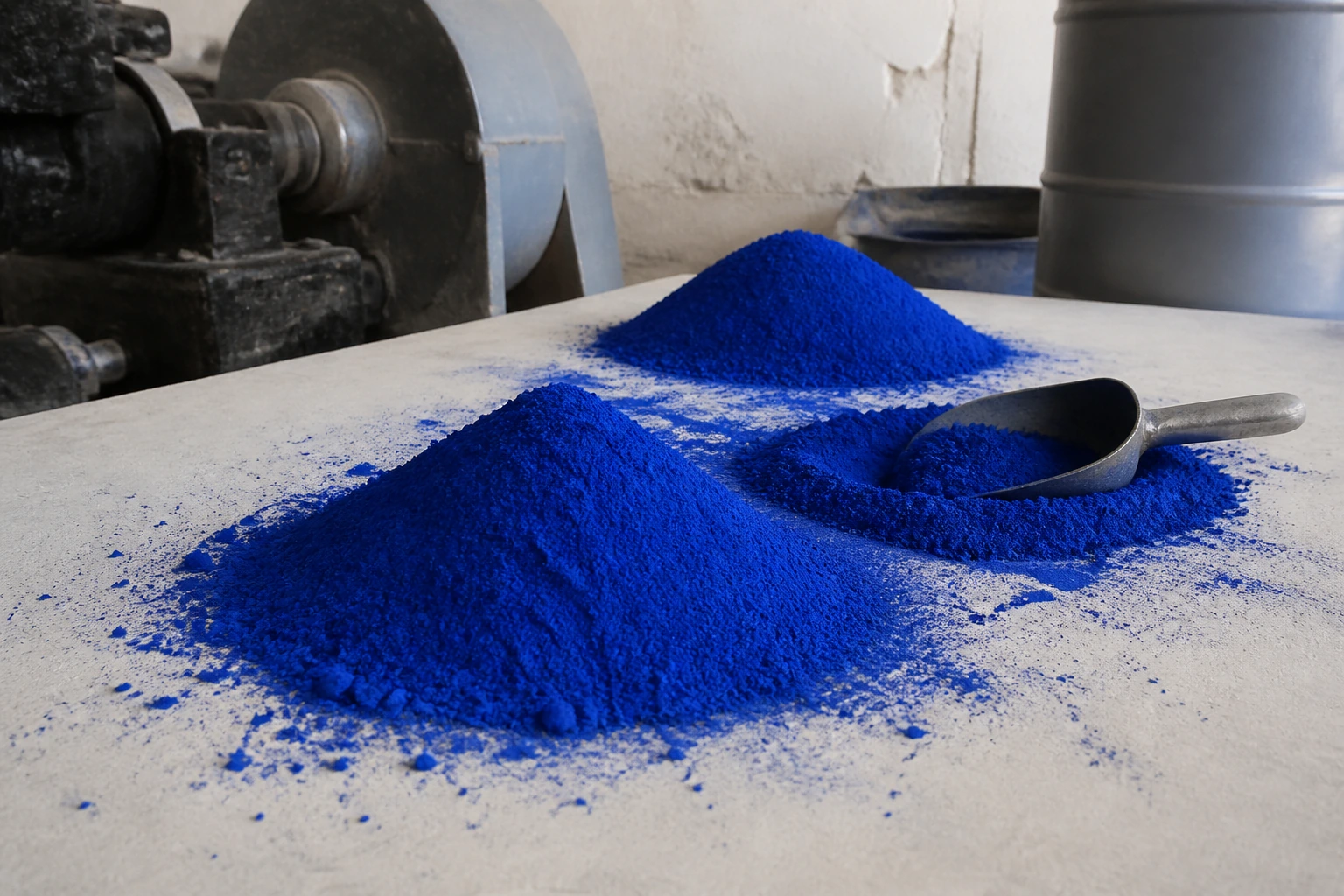
Earths from six quarries we have bought from for longer than any of us has worked here. Synthetics from two makers, both named on the label.
Natural earths are settled through four tanks over eleven days. What comes out of the last tank is what we sell.
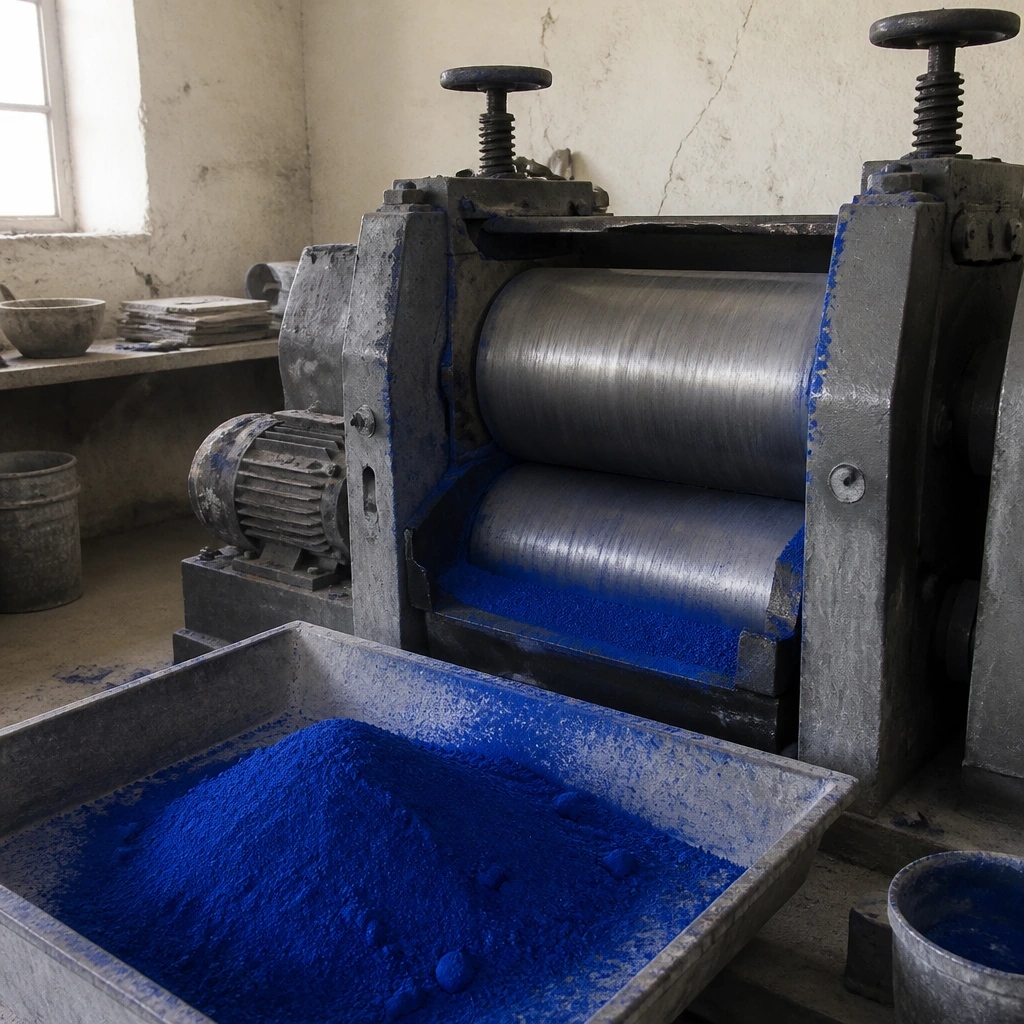
Roller mill for the earths, jet mill for anything under 3 µm. Grind is measured on every batch and printed on the tin.
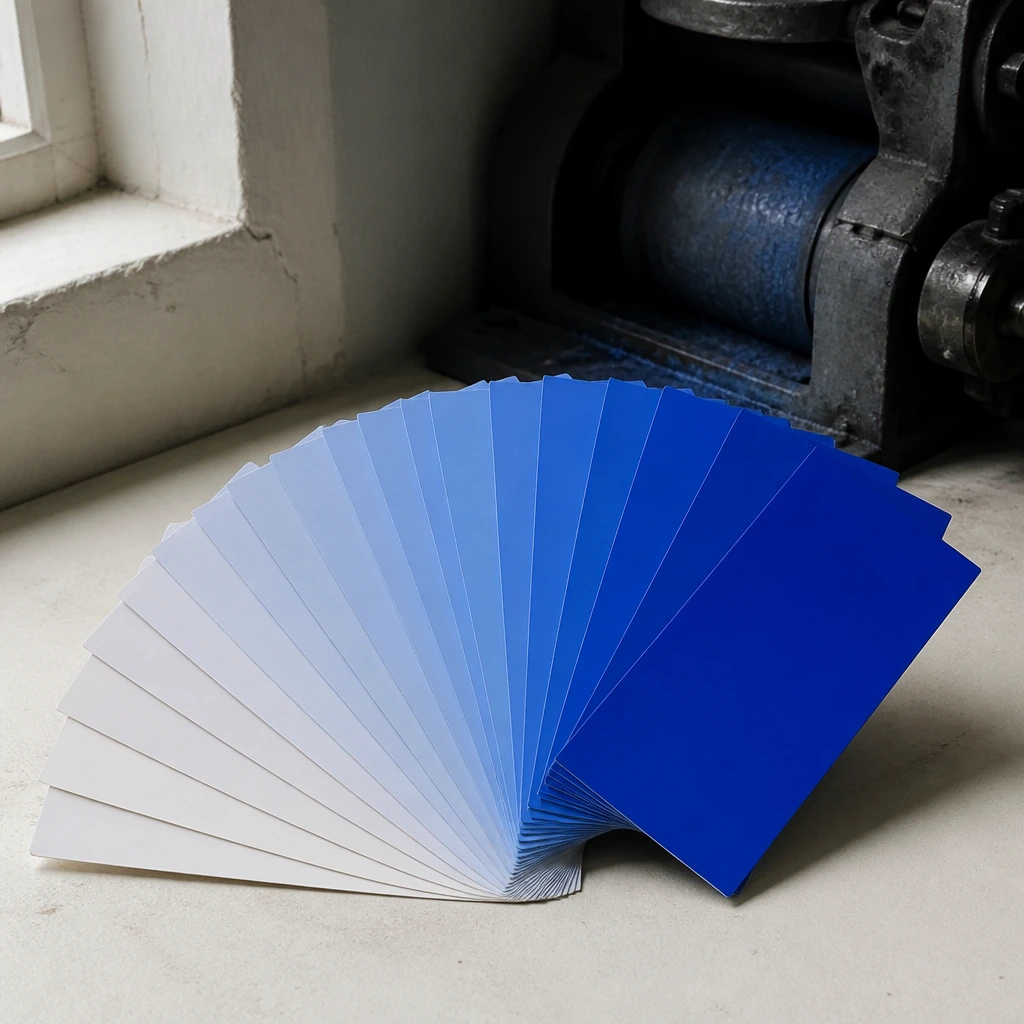
Every batch is drawn down beside the retained standard in daylight. If a colourist can see the difference, the batch goes back.
Send a chip, a fragment, or a photograph of a wall you cannot remove. We will mill against it and send three drawdowns before you commit to a kilo.
Conservation work is quoted separately and always includes the analysis: what we think the original was, how confident we are, and what we would use instead if the original is now illegal.
We do not tint to a screen value. If your reference is a hex code, we will ask you for something physical first.
Not adulteration, which is rare. These are the everyday faults that make a batch unusable.
01
Two microns coarser and the same pigment reads paler and chalkier. Grind is measured on every batch and printed on the tin.
02
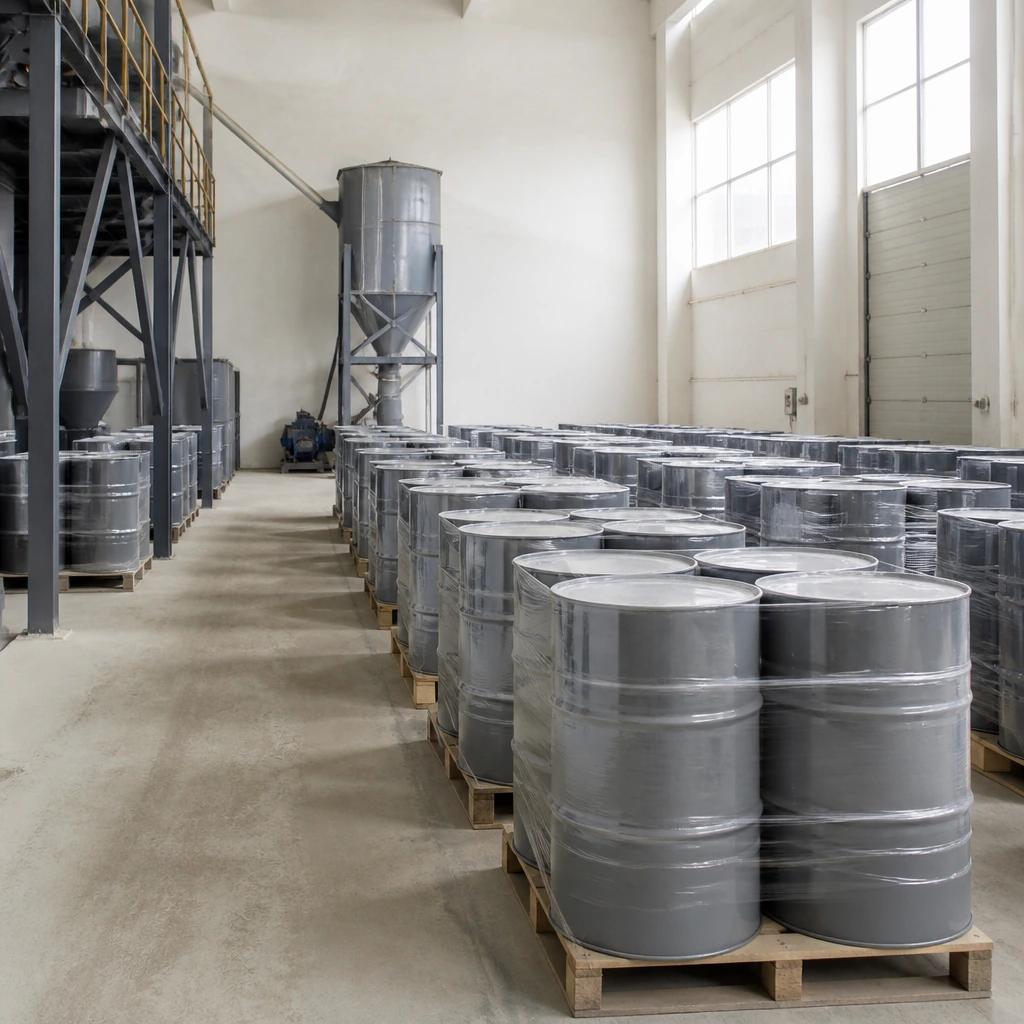
Earths take up water and cake. Warehouse bays are checked weekly and anything above six per cent goes back through the dryer.
03
A tinted mix separates in the tin. That is the pigment behaving, not failing, and it is why we sell dry and let you bind it.
Sold alongside the pigment because people ask, and because the wrong binder wastes good colour.

